
The story of Alice Kyteler
In the heart of medieval Kilkenny, in the 14th century, there lived a woman whose name would become connected to witchcraft and intrigue: Alice Kyteler. Alice was not an ordinary woman; she was born into wealth and married into even greater riches. But it wasn’t her wealth that captured the town’s attention, it was the rumours that swirled around her like mist on a dark night.
As the rumours grew louder, so did the fear and suspicion of the townsfolk. Strange happenings were attributed to Alice’s supposed witchcraft, crops failed, livestock perished and sickness plagued the town. Alice’s stepchildren, resentful of her wealth and influence, accused her of witchcraft and of conspiring to murder their father. The accusations sparked a frenzy. Alice found herself at the centre of a witch hunt, facing charges of heresy, sorcery and murder. She was the first person in Ireland to be accused of witchcraft and her trial would become the stuff of legend
The trail of Alice Kyteler was a spectacle, unlike anything Kilkenny had ever seen. Witnesses were called, evidence was presented and testimonies were given. But in the end, it was Alice’s cunning and resourcefulness that saved her from the flames. In a bold move, Alice fled Kilkenny under the cover of darkness, leaving behind her wealth and her reputation. She escaped to England, where she lived out the rest of her days in obscurity, a fugitive from justice and a legend of the Dark Ages.
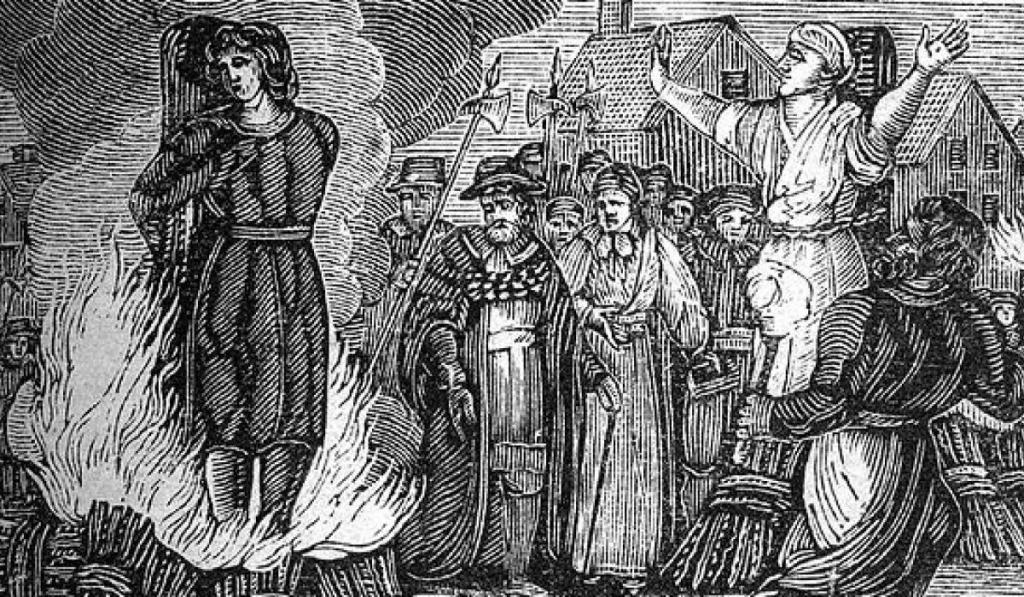
In the wake of Alice Kyteler’s daring escape from Kilkenny, the authorities were determined to bringsomeone to justice for the alleged crimes of witchcraft and murder. Unfortunately for Alice’s maid, Petronella, she became the scapegoat. Petronalla, loyal to her mistress to the end, remained behind in Kilkenny, unaware of the storm brewing around her. With Alice gone, all eyes turned to Petronella, who found herself thrust into the spotlight as the primary suspect in the witchcraft trial.
Despite a protest of innocence, Petronella faced a harsh and unforgiving trial. The evidence against her was flimsy at best, consisting mostly of hearsay and conjecture. But in a town gripped by fear and paranoia, the truth mattered little. Petronella was found guilty of witchcraft and sentenced to a gruesome fate. She was subjected to torture, forced to confess to crimes she did not commit, and ultimately condemned to death by burning at the stake.
The Alice Kyteler Festival, held in November in Kilkenny, stands as a remembrance and reconciliation, honouring the memory of those who suffered unjustly during the witch trials while celebrating the enduring legacy of women who dared to defy convention. It serves as a platform for dialogue, education and empowerment. In light of the festival’s activities, we are reminded that the echoes of history continue to ring through the corridors of time, inviting us to listen and learn.

